
What does great design look like… in an AI-powered era?
About
Designers have always had to adapt. And in a world where technologies like AI are accelerating rapidly, the real question isn’t whether we resist it, but how we learn from it. How can we harness AI as a collective force for good — not to replace creativity, but to evolve it — and continue producing great design in ways that honor its core principles?
Share this article
The core principles of strong design
Great design principles have been discussed for decades – from Dieter Rams to modern UX thinkers – and while tools continue to evolve over time, the foundations remain unchanged. Designers from all kinds of disciplines will learn early on about these principles, as they are used as core pillars when approaching and solving creative briefs.
Clarity. Good design should feel clear, easy to understand and effortless – rather than too clever. If a user needs to decode it at any point, that’s when you know it isn’t working.
Balance. Great design is aesthetically pleasing and uncomplicated, following principles of clean hierarchy, layout, typography and colour application, and making smart use of negative space to allow a design to ‘breathe’.
Consistency. One step further than balance alone, good design is visually consistent, built around a system, library and language which makes sense for each individual brand. Over time, familiarity builds trust.
Human-centeredness. Good design puts peoples’ needs first. Design starts with people (and people watching – observing behaviour) and context, shaping a truly human experience.
Authentic. Great design is driven by personality, infusing human-like traits, emotions and values into a visual system to tell a memorable and aspirational story.
Purposefulness. Good design is functional, elegant, and without excessive decorative noise or complexity which may only be distracting from the main message.
Usability. Good design is easy to use, readable, accessible. It feels intuitive and has a logical flow and structure, thanks to strong colour contrast, information hierarchy, and use of language.
Timelessness. Good design ages well and avoids chasing specific trends. It is created with adaptability front of mind and stands the test of time.
Transparent. Good design is obvious, and great design is transparent. Perhaps counterintuitively, great design allows functionality and purpose to shine with minimal distraction.
AI vs the creative industries: the current backlash
Creative industries are pushing back against AI, and they’re loud about it. Did you know? 81% of designers are in agreement that AI dulls creativity and 70% of creatives are concerned about job loss (source). The main issues creatives face are:
Cognition and lack of mental/creative stimulation. AI changes not only how we work, but also how we think. Overreliance on AI puts us at risk of atrophying our foundational skills of critical thinking and deep processing, by depending too much on external thinking. Another facet of brain rot.
Ethical concerns, copyright and ownership issues. AI is trained on datasets scraped from the internet, and this data includes copyrighted creative work. AI has now reached an advanced stage of replicating these pieces in such convincing ways, that no one would question it was AI. The old adage ‘good artists copy, great artists steal’ seems to take on a whole new meaning, where lack of consent, compensation and clarity around ownership are commonplace.
AI slop and public fatigue. Thanks to AI dramatically reducing production costs, it has become far too easy and tempting to rely on it to mass generate low-effort social media content which seemingly is only shared for the purpose of monetary gain. As human beings, we’re experiencing repetition, emotional flatness, visual sameness and a declining trust in authenticity, all factors leading to a great wave of online user fatigue.
Economic anxiety. The most destabilising and unsettling issue creatives are facing is the vulnerability of their careers and livelihoods. AI performs well at pattern-based, mid-level production tasks, able to churn out a high volume of content at a lower cost. Commercial careers in copywriting, illustration, stock imagery and primarily low-level template based design work is, at least for now, the most at-risk, creating a climate of fear over the devaluation of craft and skill.
A designer’s most valuable trait is adaptability
If there’s one thing designers need to be, it’s adaptable. Designers are creative, forward-thinking individuals who should be able to evolve their creative processes and skillsets according not only to client and user needs, but also to changes affecting society as a whole.
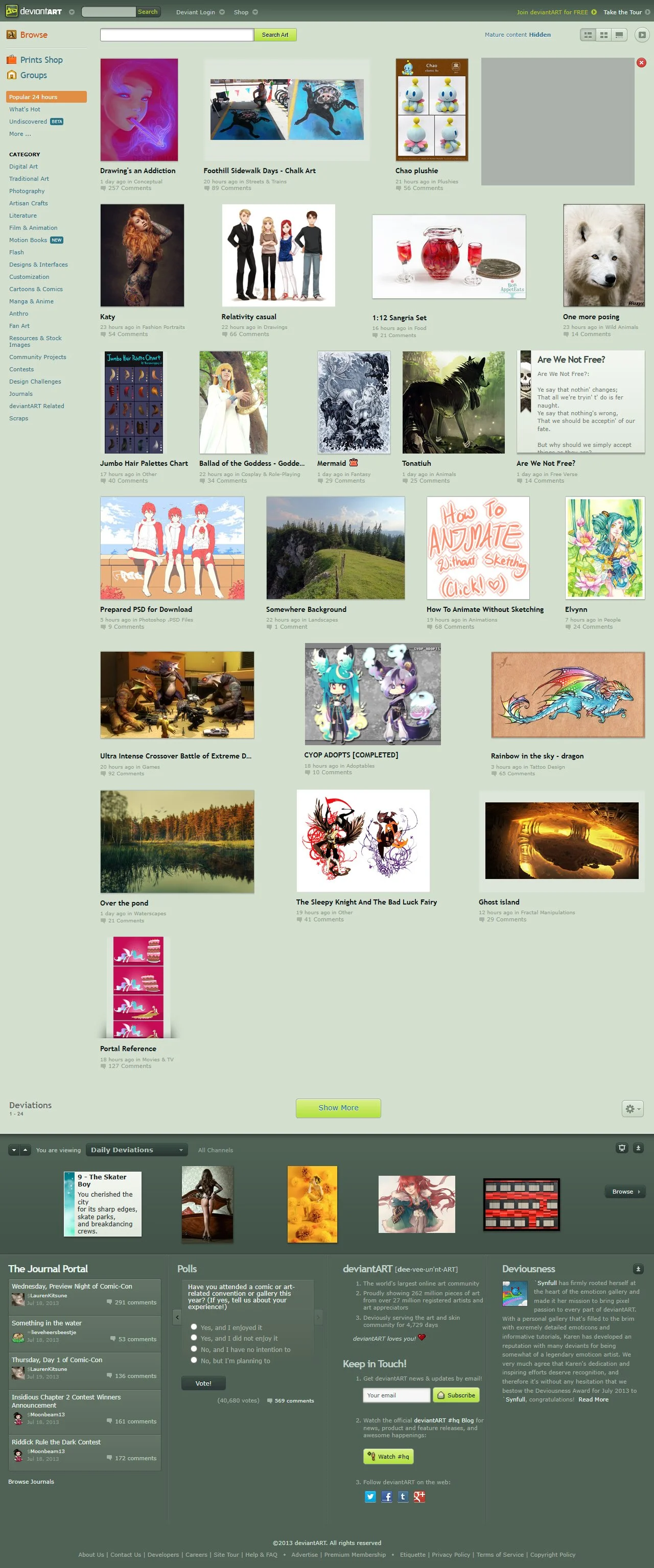
I launched my design career by starting university in 2010. Back then, on a traditional graphic design course, digital design was only briefly touched upon. Having a few mockups of a website layout was considered a nice-to-have if the brief required us to ‘explore more touch points’. Understandably, because between 2010 and 2013 when I graduated, websites still looked like this (so responsive design wasn’t necessarily front of mind either). We divided our time between honing design thinking skills by reading bibles like Wally Olins’ The Brand Handbook (still a classic today), attending lectures by successful alum who shared insight into ‘how to tell great stories through branding’, and – you guessed it – learning about print design. I loved everything about the tactile nature of print design, mostly how the different materials I was working with allowed me to express my ideas in more layered, exciting and engaging ways. Packaging design, magazine layouts, book covers and posters… the opportunities for creativity seemed endless. Even though ‘print isn’t dead’ was also on many designers’ lips at the time. So while it was an enriching experience which set me up nicely for design work at the time, I had yet to learn the most important lesson: to survive in this industry, you’ll need to be adaptable.
Instagram launched in 2010, too. Instagram’s logo still looked like a retro polaroid camera, and back then we seemed to be spending more time excited about the idea of image filters than concerned about the longer-term impact this buzzword ‘social media’ would have on our design careers. Fast forward a little, and so much has changed in just over a decade. The reality is that responsive digital design and social media design (video editing skills, a definite bonus) have become requirements for any design job, if not the first touch points brands will ask a designer to sink their teeth into. So they were definitely skills I had to learn on the job, but that’s just the nature of things. We should never stop learning. We live in a past-paced world fuelled by amazing technologies, and we can only grow by welcoming these new tools into our arsenals, making sure to keep an eye on changes around us in order to stay ahead of the curve.


New opportunities for AI-powered creativity
With this in mind, does AI have any redeemable qualities which make it worth harnessing? And I ask this despite having lost work opportunities only yesterday because of AI: it’s happened once, it will happen again, so where do we go from here and be more adaptable in order to avoid getting stung again?
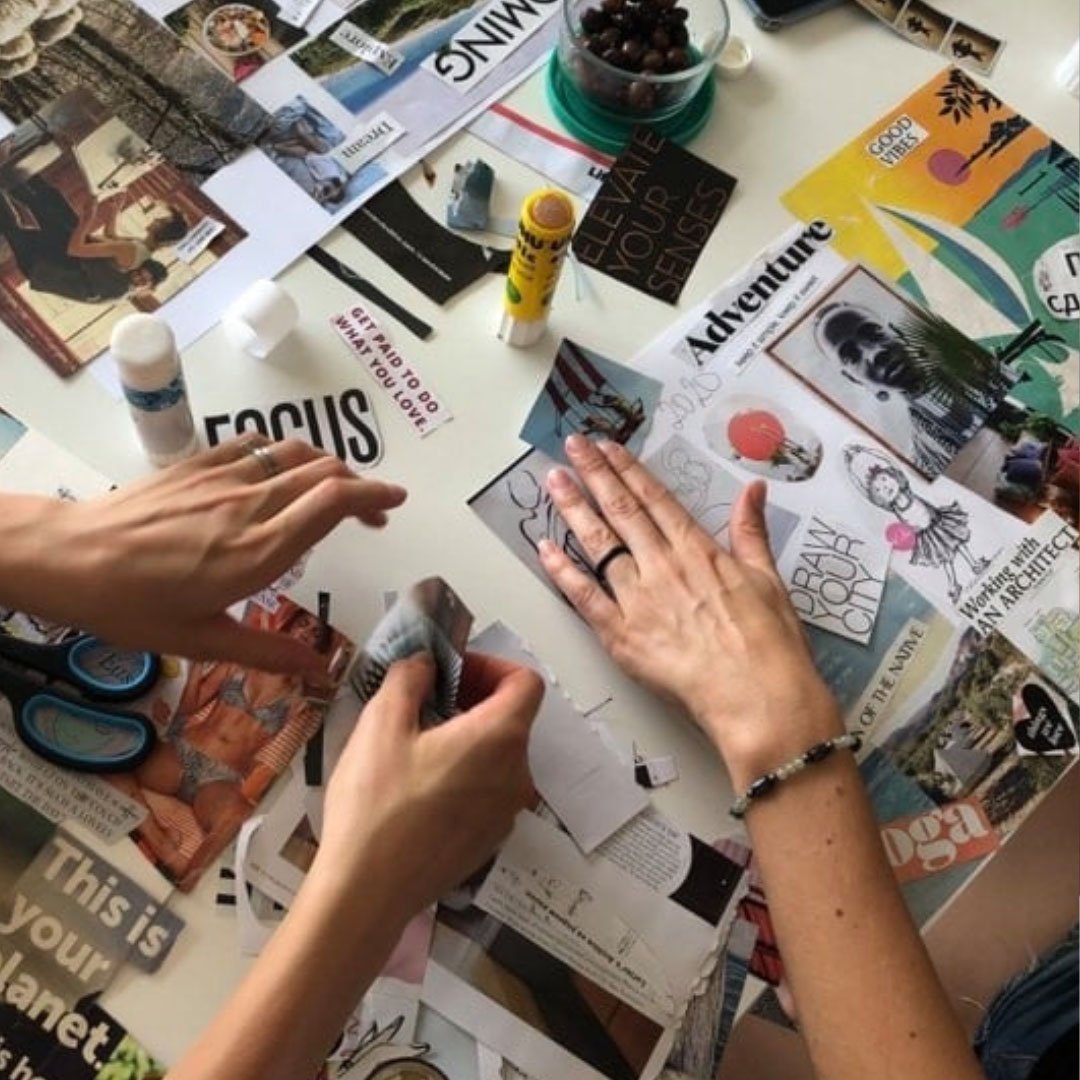
AI as a tool for exploratory ideation and iteration. I believe the creative process should always begin with an exploratory phase with enough wiggle room for experimentation. It’s by exploring that great ideas take shape – beginning with a mood board, sure, but also going out into your community, asking relevant people the right questions, and allowing yourself time to imagine different scenarios and outcomes for a brief. But in such a fast-paced world, the reality is simply that designers, whether working alone or in a team, won’t always have time to dedicate to this open-ended ideation phase. In fact, they’ll get praise for being able to think quickly and execute even faster. Besides, clients might already know exactly what they want, and that’s fine too. But this is where AI can help: without changing the nature of our creative process, we can use AI as a tool for creative prompts, one which is able to quickly generate reliable sourced information about culture, society and more. One which, in the interest of time, can help us reason better, distill our thoughts, and steer our ideas in the right direction.
AI still isn’t there for generative imagery, but some tools are helpful. Have you had a design brief come through lately asking you to artwork a set of 100+ performance marketing ads, only to wonder how you’ll tackle some of the more repetitive tasks? I’ve personally found AI useful for taking the grunt work away so I can focus on what truly matters: spending time on composition and creative brand expression. One example of this has been using background remover and image quality enhancement tools, which provide accurate outputs with very low risk of distortion. But having said that, I still wouldn’t comfortably rely on AI to generate entire concepts for me – I would err on the side of caution here, especially considering the ethical issues AI still faces around copyright infringement, and keep any AI generated imagery to early ideation phases (like a dynamic mood board of sorts).
AI, an unbiased ethnography research co-pilot? This one might be a hot take, at least for now, because if used carelessly AI can definitely amplify bias rather than suppress it altogether – because it is mainly a restructured reflection of its own findings. We’ve seen it in visual prompts too, where people and places in AI generated imagery tend to look copied and pasted, lacking deeply in unique characteristics and expressions. However if used carefully, data trained and prompted very accurately, AI can potentially be used more systematically in user behaviour and trend research. AI may help detect patterns at scale, by clustering themes across interviews and identifying outliers. AI may also flag emotionally loaded phrasing, suggest neutral restatements, and highlight assumptions. And if continued to be prompted right, AI may help reinterpret findings from another cultural lens, stress-test conclusions, and build counter-hypotheses to combat confirmation bias or premature. So perhaps instead of wondering if AI makes ethnography research unbiased, we should be asking ourselves how AI can help us surface and interrogate our biases more rigorously. A devil’s advocate in your pocket? ✺
Discover more ideas